
Updated: August 8, 2026
From Flapper and Shot Peening to Pneumatic-Controlled Needle Peening, here are the differences
Flapper peening, pneumatic-controlled needle peening, and shot peening are the three main peening methods used in aerospace manufacturing and repair. Each is governed by its own SAE AMS specification and suited to different applications, from full-surface treatment to FOD-free repairs on fully assembled engines.
Here’s how they compare.
The peening industry widely relies on the shot peening method, but this method does not address different challenges such as energy consumption, machine footprint or accessibility.
In an article published by Metal Finishing News, MFN International in 2022, Shockform weighed the standard shot peening method against the flapper peening technique that solves some of the issues mentioned above.
The flapper peening technique uses Kevlar flaps on which some tungsten carbide bearing balls are glued. The speed at which the flap is rotating provides the momentum to the balls that transfer their kinetic energy onto the surface of the part.
The needle peening is another technique. It is sometimes confused with the needle hammering, but the applications of these techniques are very different.
In fact,
- The needle hammering aims to “peen” (or “hammer” the welds toe area to modify its profile), while
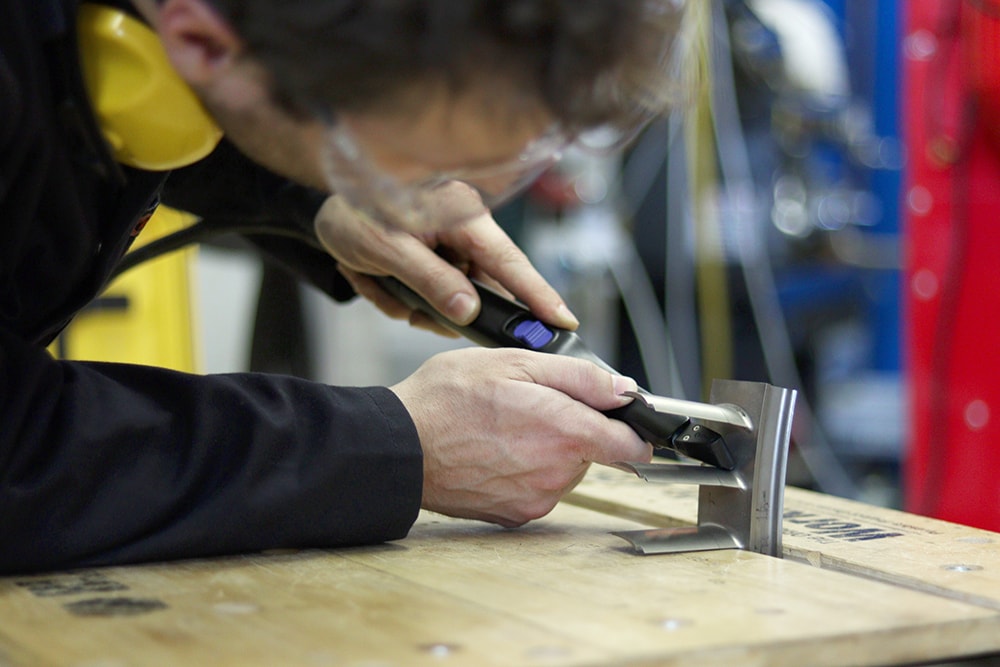
- The needle peening uses tungsten carbide needles that are much smaller and are particularly used with repairing aero engines, power generation turbines, airframes or other critical components where other peening technologies show shortcomings.
All described peening techniques are framed by SAE AMS specifications:
| Method | SAE Standard | Certified Shockform Equipment |
|---|---|---|
| Flapper peening | AMS 2590 | FlapSpeed® PRO |
| Pneumatic needle peening | AMS 2545 | Spiker®-ES |
| Shot peening | AMS 2430 | SmartPeen® |
In fact, Shockform’s Spiker®-ES is the only needle peening equipment known on the market using in-house developed tungsten carbide needles for optimal performance.
Have a look at the short Spiker®-ES video to see how it works.
Want to know more about the different peening technologies? Contact us at sales@shockform.com.
FREQUENTLY ASKED QUESTIONS
What’s the difference between flapper peening and shot peening?
Flapper peening uses rotating Kevlar flaps with tungsten carbide balls to strike a surface, while shot peening propels loose media using air pressure. Flapper peening is more portable and better suited to hard-to-reach or localized repairs.
Is needle peening the same as needle hammering?
No. Needle hammering peens weld toe areas to modify their profile, while needle peening uses smaller tungsten carbide needles designed for repairing aero engines, turbines, and other critical components, a different process for a different purpose.
Which peening method is best for fully assembled aircraft engines?
Pneumatic-controlled needle peening, since it produces no FOD (foreign object debris) and can be performed without disassembly, unlike shot peening, which requires bagging and cleaning.
What SAE AMS standards apply to each peening method?
Flapper peening follows AMS 2590, pneumatic needle peening follows AMS 2545, and shot peening follows AMS 2430.
I’m unsure which peening process is right for my project. Can a Shockform expert help?
Yes. Our team can help you identify the best peening method for your specific application, whether it’s flapper, needle, or shot peening. We also offer on-site peening training once you’ve selected the right process. Contact us at sales@shockform.com to discuss your project.
About this article
AI tools may have been used to help draft, structure, or refine parts of this content. All technical information is reviewed and verified by our team before publishing. AI supports how we communicate our expertise, it doesn’t replace it.