
Reading time: 3 minutes
Skills are built and maintained. In aerospace maintenance, that’s not a motivational poster; it’s an operational reality. Training programs support the introduction of new products and the updating of existing practices, in environments where the margin for error is nearly zero, and they’re not reserved for beginners.
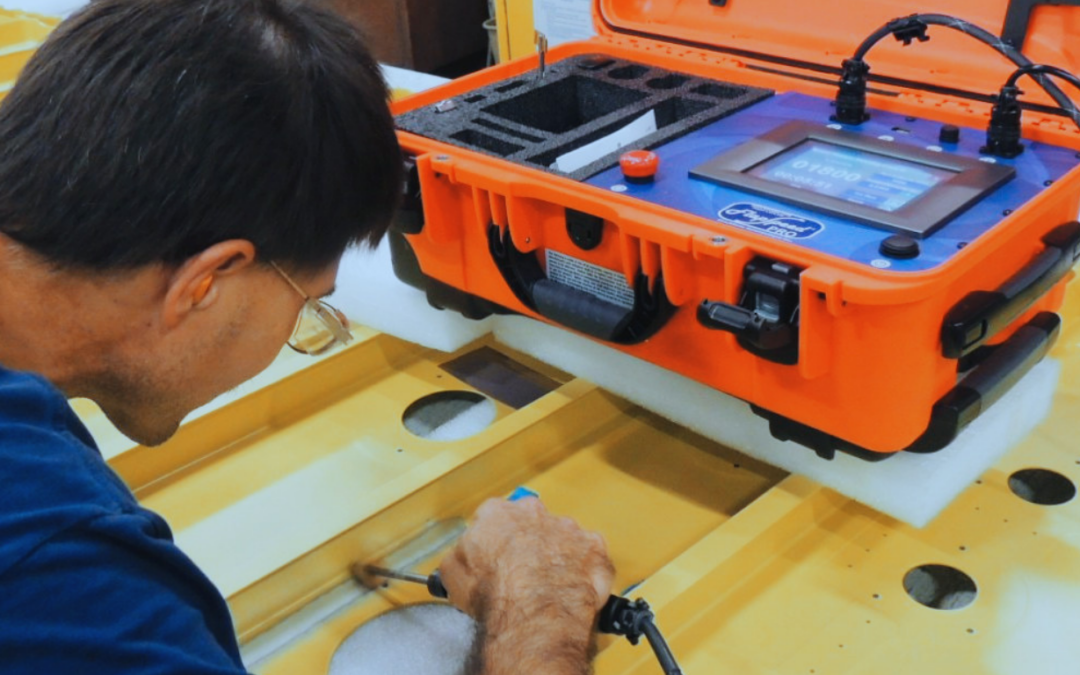
At Shockform, we’ve been developing portable manual peening solutions for the aerospace industry for over 20 years. What we observe in the field, year after year, is that the solution alone isn’t enough; it becomes significantly more effective when paired with training to ensure operators master the process in critical, restricted environments sensitive to metal fatigue and corrosion.
When the Field Sets the Rules
Turnaround times in MRO environments and among airline operators have tightened. Reducing aircraft downtime, what the industry calls AOG (airplane on the ground), is an absolute priority. Military operations are no exception: they run with leaner teams and less tolerance for process variation.
FOD-less environments (where no debris of any kind can be tolerated) require disciplined tool management that goes well beyond general awareness. Access restrictions on certain components force operators to achieve consistent results in constrained positions, without the ability to easily start over.
On top of that, there are growing expectations for documented traceability: not just that peening was performed, but how, under what conditions, and with what measurable outcome. The operational picture is significantly more demanding than what many current practices were originally built around.
Training as a Precision Tool
Training addresses two distinct realities. For new operators or technicians, it provides the opportunity to acquire, in a controlled theoretical and hands-on environment, the knowledge of our solutions and their full potential. For more experienced operators, it helps experienced operators refresh the underlying process logic, reconnecting with why specific parameters matter, not just what values they’re set to.
This kind of alignment has concrete effects: reduced variability between operators performing the same task, better adaptation when conditions change, greater consistency when working on components or in environments outside routine experience, and better-documented traceability. An operator who understands the process also documents it more correctly; not as an administrative task, but as a natural outcome of work done right.
The Shockform Advantage: Trained by the People Who Built It
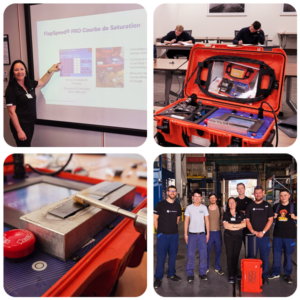 Choosing who trains your team matters as much as choosing the right tool. As the OEM of the FlapSpeed® PRO, Shockform brings something no third-party training provider can: direct knowledge of every parameter, every design decision, and every real-world application built into the tool your operators use every day.
Shockform’s senior trainers each bring over 30 years of aerospace industry experience and are active members of the SAE AMEC and J SPEC committees on surface enhancement. The same committees that shape the standards your operations must meet. Since 2013, the team has trained hundreds of operators and technicians worldwide, in English and French.
Shockform conducts training on-site, at your facility, so your team learns in the actual environment where the work happens, on your components, under your operational constraints. Shockform supports aerospace maintenance teams across the Americas, Europe, the Middle East, Asia, and Oceania.
No theory disconnected from your reality. Shockform delivers process knowledge where it matters, by the people who know the tool best.
Explore our FlapSpeed® PRO training program
The Next Update Might Be Yours
Aerospace operations continue to evolve. Components are more complex, maintenance windows are shorter, and documentation expectations are higher. The peening process sits at the intersection of all three.
At Shockform, we see it at every training session: it’s rarely the know-how that’s missing; it’s sometimes the opportunity to bring it up to date. Keeping operations current ultimately means supporting reliable performance right where the action happens.