
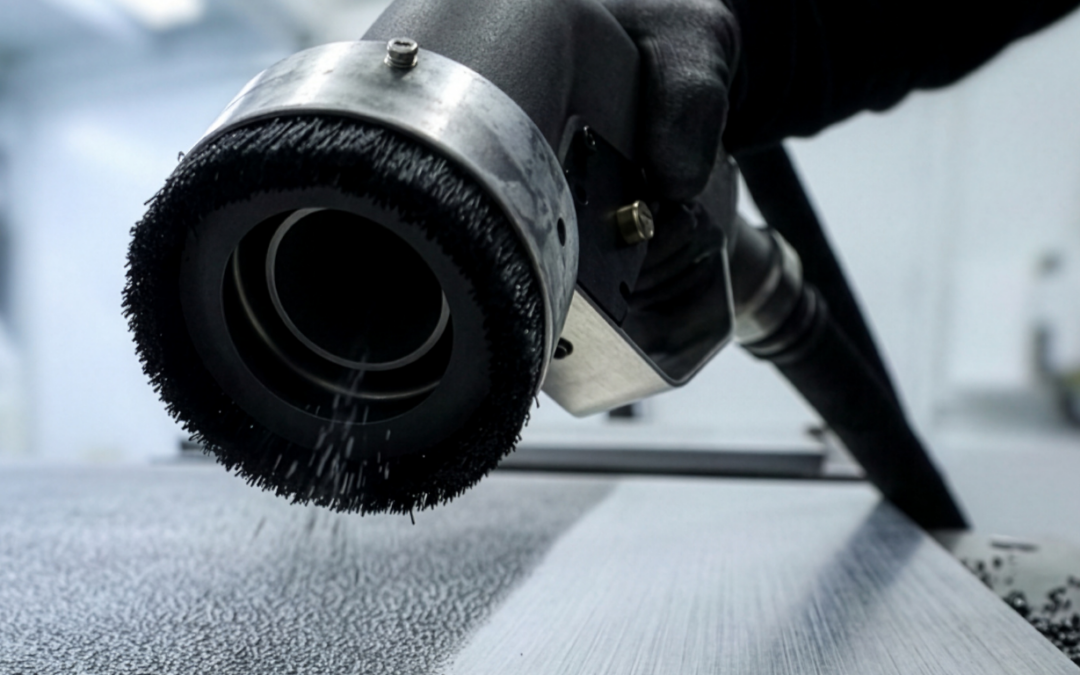
The Mechanism Behind Peening
Peening locks compressive residual stress into a component’s surface, and it’s the actual mechanism that resists fatigue crack initiation. Every peening process, whether flapper, needle, or shot, exists to produce it. It sounds like a simple goal. Achieving it consistently is not always that simple.
What’s Actually Happening at the Surface
When media strikes a metal surface with enough force, it causes localized plastic deformation. The surface layer stretches slightly, but the material beneath it does not. As the component returns to equilibrium, that mismatch locks in a layer of compressive stress at the surface, with the underlying material left in a balancing tensile state deeper in the part.
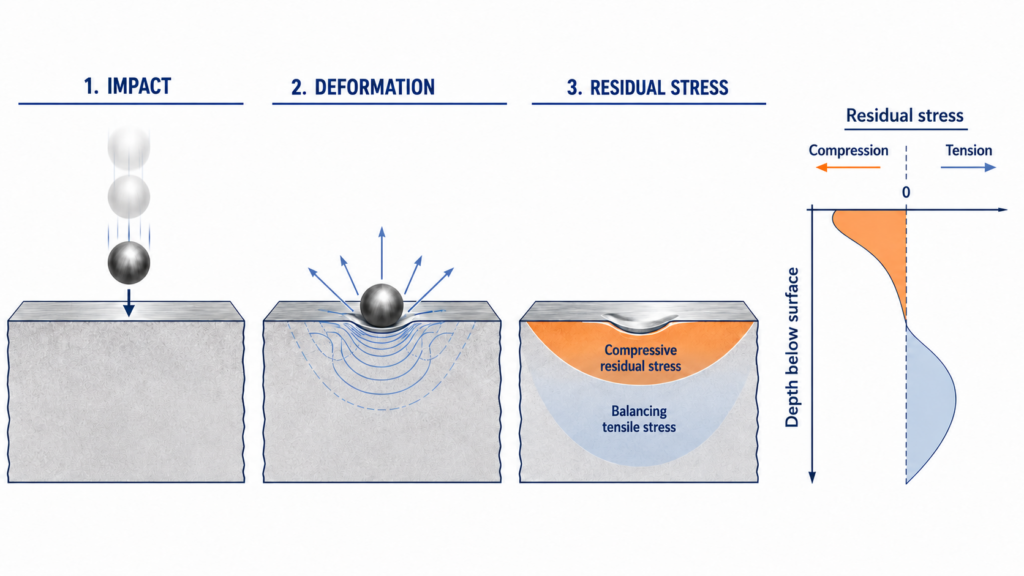
This compressive layer matters because fatigue cracks almost always start at the surface, at a fastener hole, a fillet, a machined edge. Cracks propagate under tensile stress. A compressive layer actively resists that tensile stress, delaying or preventing crack initiation altogether. It is not a coating and it does not change the part’s dimensions in any meaningful way. It changes the internal stress state of the material itself.
Why Controlling It Is Harder Than It Sounds
The depth and magnitude of that compressive layer depend on several variables at once: media hardness, velocity, angle of impact, and exposure time, among others. Change any one of them and the resulting stress profile changes too. Peening intensity and coverage are how this gets verified in practice, a topic covered in our Demystifying Almen Intensity article, but the underlying challenge starts here, at the surface itself, before any measurement ever happens.
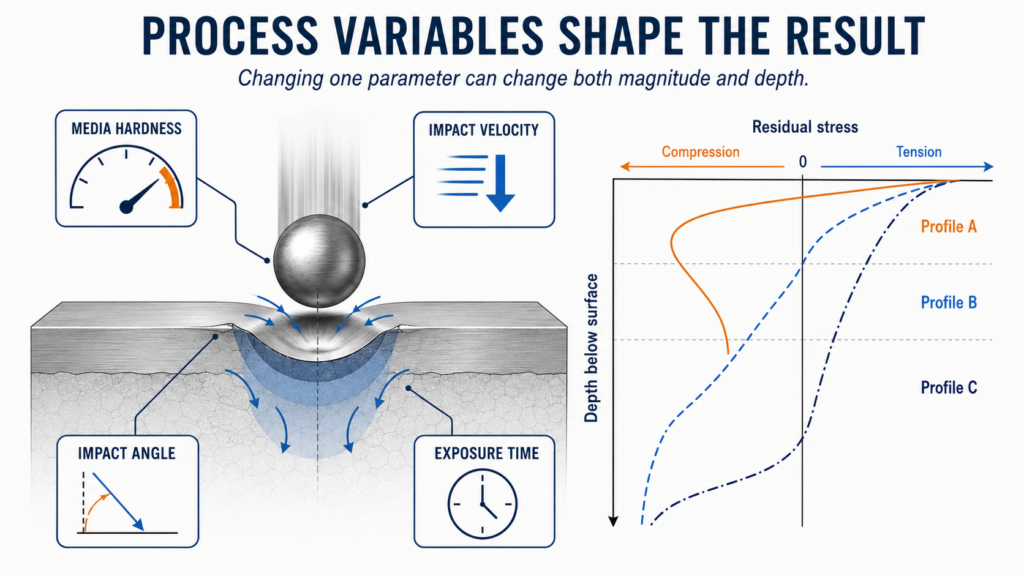
This is also where equipment design matters as much as the process itself. A machine that cannot hold its parameters steady across a full pass will produce a compressive layer that varies across the part, inconsistent in the places where consistency matters most.
Getting this wrong isn’t just a theoretical concern. Aerospace failure analyses have documented cases where improperly controlled peening contributed to fatigue failures rather than preventing them, a reminder that the compressive layer only helps if the process stays inside its specified parameters, pass after pass.
This is the problem closed-loop control was built to solve RPM in flapper peening. Rather than running at a fixed speed and hoping conditions stay constant, a closed-loop system continuously monitors and adjusts RPM in real time, correcting for variables like changes in contact pressure as they happen, not after the pass is already done. All three of our peening solutions, FlapSpeed® PRO, Spiker®-ES, and SmartPeen®, are built around this principle, holding the process inside its specified window pass after pass, rather than relying on an operator to compensate manually mid-run.
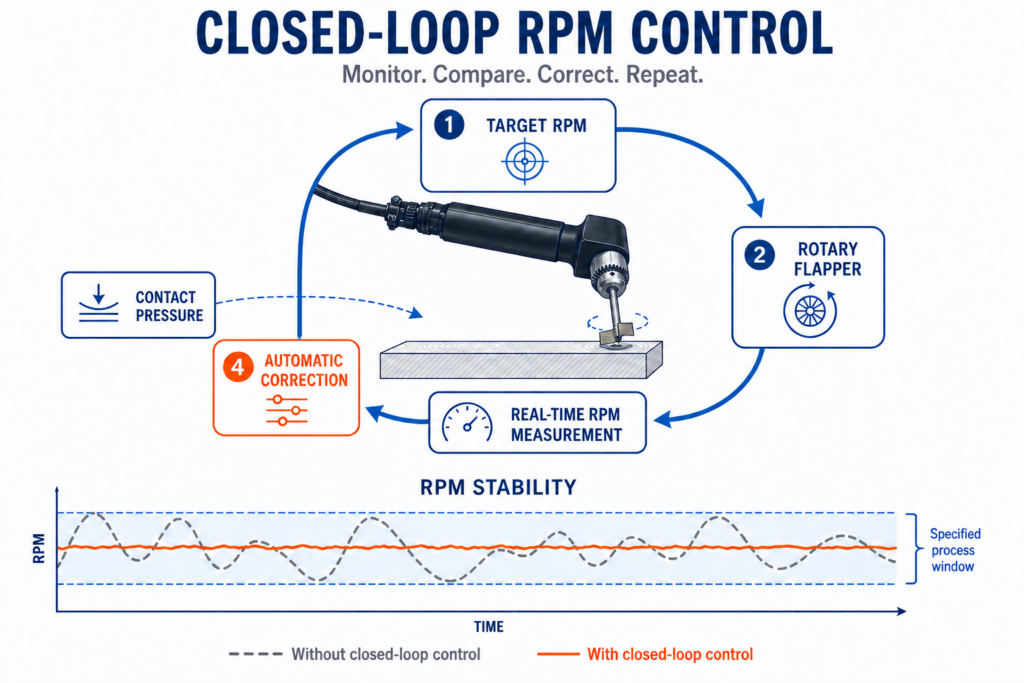
The practical effect is straightforward: less variability between operators, less variability between passes on the same part, and a process you can trace back to actual recorded machine parameters. Not an assumption that operators followed the settings correctly. On a component where the whole point is a consistent compressive layer, that kind of control is not a convenience. It is the difference between a process that is repeatable and one that only looks repeatable on paper.
Three Processes, One Underlying Goal
Shockform builds three peening solutions, each engineered to produce a controlled compressive layer in a different context:
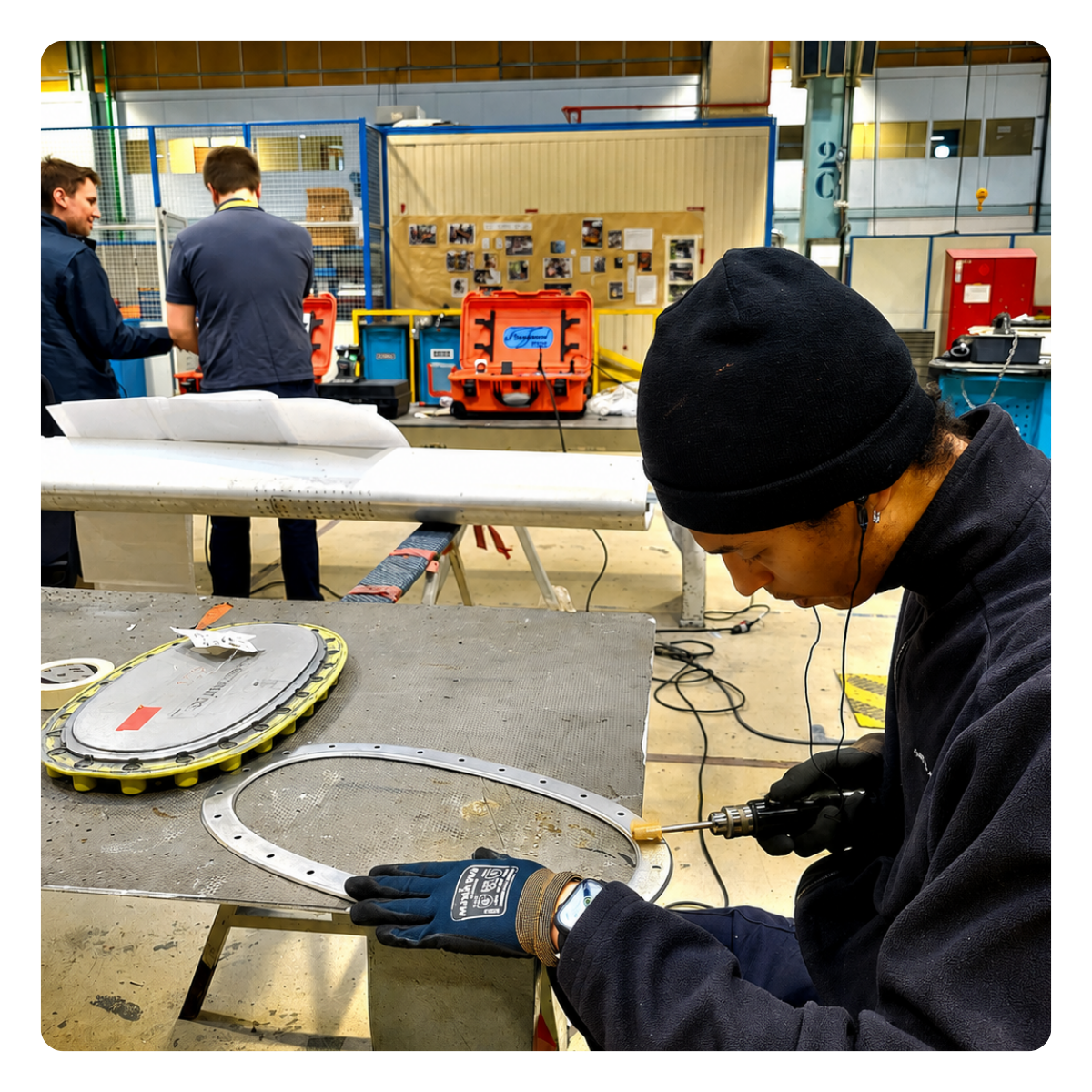 |
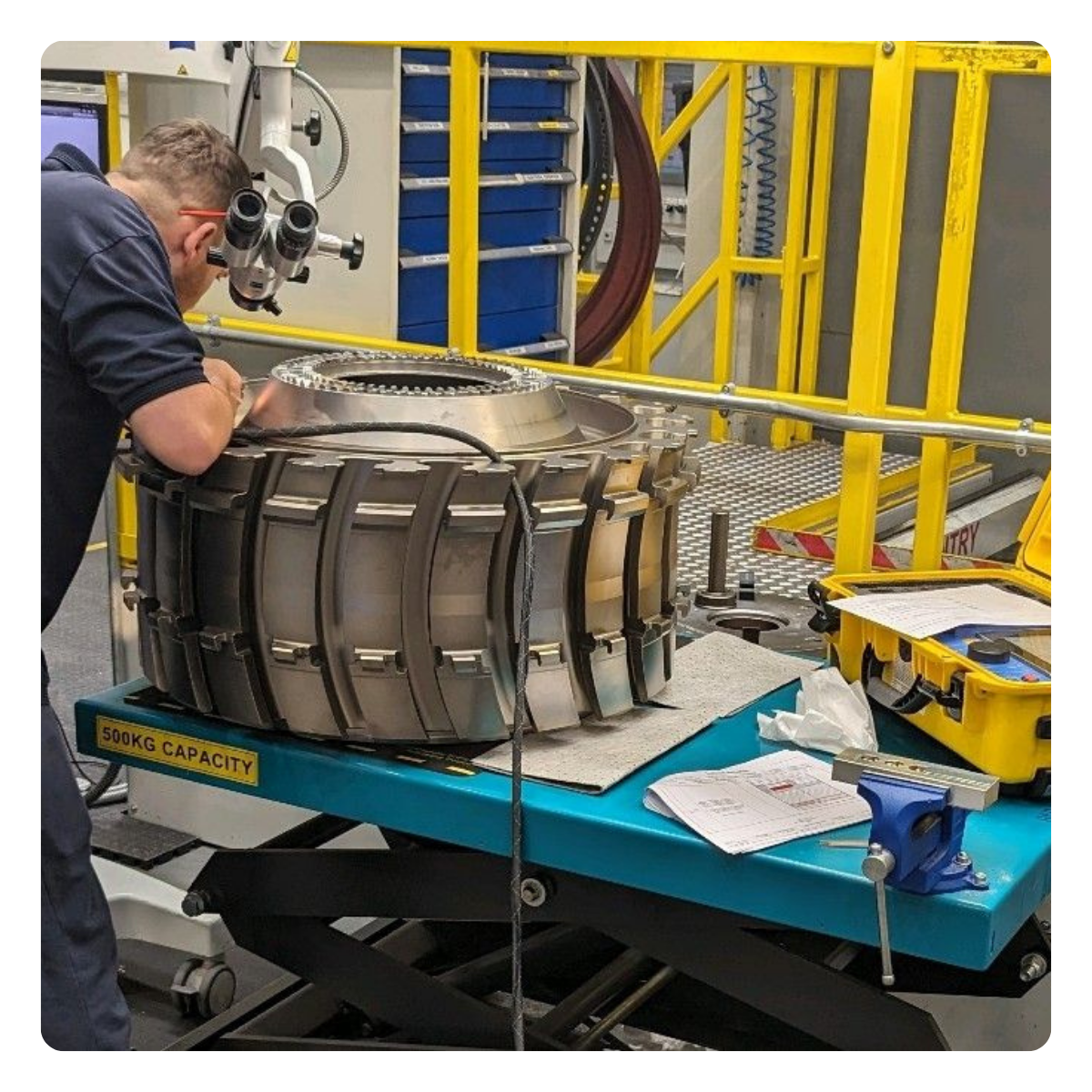 |
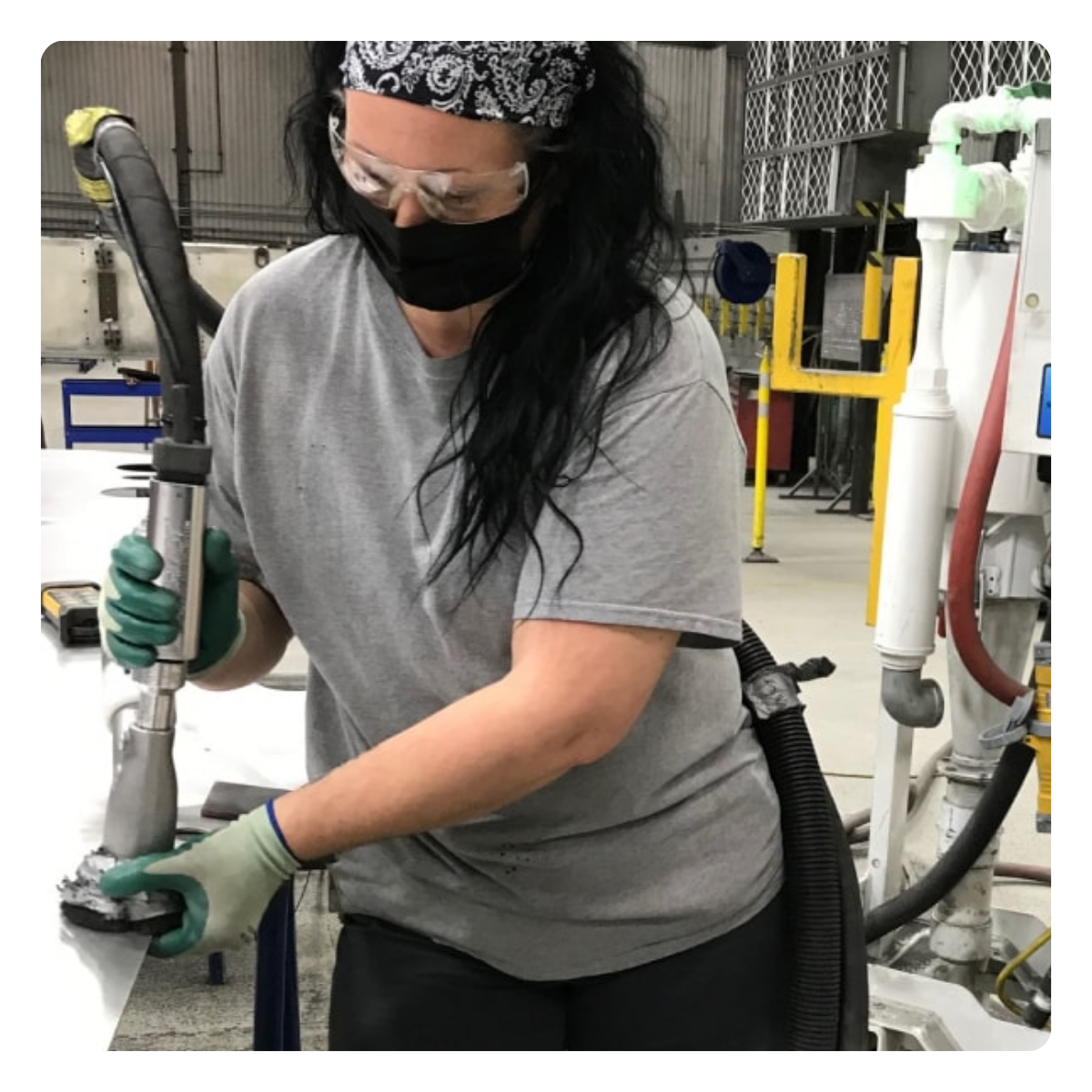 |
FlapSpeed® PROuses rotary flapper action to introduce a controlled compressive layer directly on surfaces, without pulling the component off the aircraft.
|
Spiker®-ESuses needle peening to reach tighter, more complex geometries where broader tools cannot physically follow, while still producing the same controlled compressive result.
|
SmartPeen®uses controlled shot peening to apply a broader, compressive treatment across larger surfaces, suited to components that absorb repeated, high-magnitude cyclic loads.
|
Different components need different approaches to reach the same underlying outcome. That is the reasoning behind building three distinct solutions rather than one.
Where It Matters Most
Compressive residual stress is not a niche concern. It sits behind fatigue life calculations across civil aviation, defence, energy, and space applications, anywhere a metal component experiences repeated cyclic loading over its operational life. Aging fleets in particular depend on it: a component engineered decades ago now accumulates far more cycles than originally planned, and the compressive layer at its surface is doing more of the work to keep it there.
Want the technical detail on how intensity and coverage get measured?
Our Peening FAQ covers the fundamentals in depth.
Talk to our experts about how our peening equipment could fit your process.
Image disclaimer: This image was created using AI, augmented from Shockform’s own equipment styling, to help illustrate the surface treatment concept discussed above.